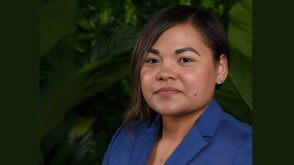
Turning Lived Experience into Healing, Education, and Community Change
Areliz Barbosa has turned lived experience into a powerful force for education and advocacy. A Clinical Assistant Professor in Bay Path University’s MS in Physician Assistant Studies program, Areliz draws on decades of community health work and personal resilience to help future healthcare providers better understand trauma, substance use disorders, and the importance of compassionate care. Through her teaching, nonprofit leadership, and community advocacy, she is helping create pathways to healing for individuals and communities alike.
What do you do at Bay Path?
I teach in the MS in Physician Assistant Studies program. Before joining full-time, I was an adjunct instructor for five years, so I’ve been affiliated with the program for about six years. My official title is Clinical Assistant Professor, Senior Project Coordinator, and Co-Principal Investigator for a SAMHSA initiative.
A fun fact is that I’m also a student here—I’m currently pursuing my Master of Public Health at Bay Path.
What has been your career pathway?
I earned a BS in Human Services from Springfield College. While I was a student, I completed an independent project called Breaking Barriers, which focused on co-occurring disorders and substance use.
At first, I was told the project might not be approved because of the stigma surrounding substance use disorder. But I gathered letters of commitment from community partners and built a team to support the work. The project was eventually approved by the IRB board and was very successful.
That experience helped define my career and my advocacy work.
What is your role in the classroom?
I bring my lived experience into the classroom when working with physician assistant students.
I’ve co-facilitated several sessions with instructors from other disciplines, and so far, we’ve reached about 120 PA students. I also coordinated a panel discussion focused on substance use disorders, medication-assisted treatment, and the stigma associated with co-occurring disorders and harm reduction.
This is important because the physician assistants who will soon be working in the field need to recognize the signs when something deeper is happening with their patients. Sometimes the person sitting in front of you may be ashamed or afraid to talk. Providers need to know how to initiate those conversations and understand that physical symptoms may be connected to trauma or challenges happening in a patient’s life.
How do you bring your lived experience into your teaching?
Much of what I teach focuses on behavioral health, harm reduction, multiple pathways to recovery, co-occurring disorders, and self-care.
My background as a community health worker for 28 years really shapes my approach. I try to help students understand the full picture of what patients may be experiencing and how to respond with compassion and awareness.
You have a unique background. Would you mind sharing a bit about it?
I always like to share that I identify as someone with lived experience. I am a trauma survivor, but also trauma-survivor resilient.
Growing up, I experienced mental, physical, and sexual abuse. I also experienced homelessness, and addiction was present in my home. There was generational abuse in my family: my grandmother experienced it, my mother experienced it, and I experienced it.
A pivotal moment for me happened during my first prenatal appointment. I was alone and the doctor gently asked me if I had ever experienced abuse. When I finally said yes, it was the first time I felt truly heard by a medical provider.
He explained that addressing trauma was important for my health and my baby’s health. That conversation changed my life. It pushed me to begin healing and ultimately shaped the work I do today. I decided I was going to break the cycle and make sure my son had a very different life experience.
Where does your expertise come from?
Much of my expertise comes from 28 years working as a community health worker and more than 40 years of lived experience with trauma and co-occurring disorders.
Because of that experience, I’ve worked as an independent consultant for the Commonwealth of Massachusetts, helping create training and educational content funded by Massachusetts General Hospital and Blue Cross Blue Shield.
During the pandemic, I also served as part of the Massachusetts Contact Tracing Collaborative under Governor Charlie Baker. A lot of my work involves creating safe spaces for listening sessions and using storytelling and community experiences to help inform policy and advocacy.
Much of your work focuses on substance use disorder. Why is this issue so important to you?
Often, the root cause of substance use disorder is untreated trauma. When trauma goes unaddressed, people sometimes turn to substances as a way to cope or self-medicate. Unfortunately, many people struggling with addiction are not receiving treatment that addresses those underlying traumatic experiences.
We need to create spaces where people feel safe talking about what they’re going through. Education, especially for healthcare providers, is an important step toward making that happen.
Can you tell us about Olivia’s Mission?
Olivia’s Mission is a nonprofit I founded that focuses on empowering women through peer support groups, mentorship, and training. The goal is to create safe environments where women can heal, connect with others who share similar experiences, and build pathways toward empowerment. We offer counseling support, skill-building workshops, and community programs that uplift and inspire women.
Recently, you were appointed to the City of Holyoke’s Citizens Opioid Advisory Committee. What does that work involve?
The committee was established in 2025 after Massachusetts began receiving opioid settlement funds from manufacturers and distributors. The state will receive more than $1 billion through 2038, and some of those funds go directly to municipalities.
Our role is to help prioritize proposals and recommend community partners that should receive funding to address substance use and recovery programs in Holyoke. It’s an interdisciplinary committee with people from many different backgrounds and experiences. I’m proud to bring my lived experience to that table.
Is this work your life’s mission?
Absolutely. For me, this work is about breaking cycles of trauma and creating opportunities for healing. I want to make our communities better places to live, and it starts with each one of us.
For the past 23 years, I’ve also organized a Thanksgiving outreach effort. It started in my home serving 34 meals, and last year we served 2,000 meals through a community collaboration. No matter our beliefs, differences, or socioeconomic backgrounds, people came together to help others.
That’s what my work is about: seeing the whole person and creating a community where everyone has the chance to heal and thrive.