
Honoring Our Veterans: Stories of Service from the Bay Path Community
Each Veterans Day, November 11, we pause to recognize and thank the men and women who have served in the United States Armed Forces. Their experiences, sacrifices, and contributions deserve our gratitude, not just on Veterans Day, but throughout the year.
At Bay Path University, we are proud to have veterans and military-connected students as part of our community. They bring unique perspectives, experiences, and a commitment to service that enrich our classrooms and campus.
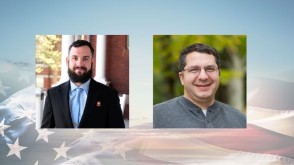
This Veterans Day, we're honored to share the stories of two current Bay Path students, Nolan Buck and John Usinski, who reflect on their military service and the experiences that have shaped their lives.
We invite you to read their stories and join us in thanking all who have served.
Meet Our Student Veterans
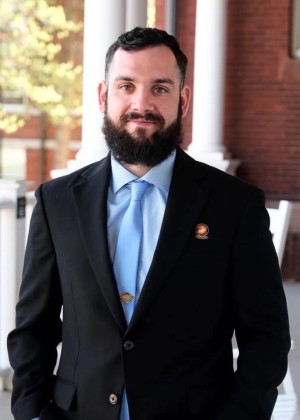 Nolan Buck
 was deployed to Crow Valley in the Philippines in 2016. He served as a Corporal (E-4) in the Marine Corps and is currently the inaugural director of military and veteran services at Fitchburg State University. He is in the second year of his doctoral program in health science with a concentration in advanced informed trauma counseling.
Growing up in Springfield, Nolan Buck didn’t picture himself going to college, and at 16, had already begun training through the Marine Corps’ delayed entry program. “I was looking for direction, purpose, and just an overall opportunity to figure out who I wanted to become at that age,” he said.
At 18, just after graduation, he enlisted. By 19, he was deploying to Japan, the Philippines, and other parts of Asia as an ammunition technician, responsible for millions of dollars’ worth of ammunition and explosives and for the Marines working beside him.
Although he hadn’t considered himself a leader in high school, making difficult decisions in the Marines showed him how much others depended on him, and how calmly and clearly he could lead under pressure.
During his deployment in the Philippines, his eyes were opened to different concepts of abundance and scarcity that shaped daily life there, inspiring him to consider what people are grateful for and notice what he took for granted back home. He recalls watching children ride a water buffalo and seeing how appreciative people were when his group shared peanut butter with them.
That new openness gave him a deeper sense of empathy and made him more inclined to question what might be going on with someone who seemed angry or withdrawn. “Every situation differs,” he said. “As a leader, you really have to look at the whole situation for each person.”
During his time in the Marine Corps, Nolan experienced the challenges and complexities that can accompany military service. Those experiences ultimately contributed to his decision to leave active duty honorably and navigate a difficult transition into civilian life, one that challenged his understanding of his own identity as a veteran.
With encouragement from his wife, he went to college after leaving the Marines and earned a bachelor’s degree in exercise and sport science and an MBA in healthcare administration. He worked with veterans at nonprofits and as a municipal veterans service officer before becoming the director of military and veteran services at Fitchburg State University.
Some of his work today is practical, helping students sort out which benefits they qualify for, but much taps into his own awareness of how out of place veterans can feel on a college campus, especially when they’re juggling classes with jobs and families. All these experiences are part of his decision to pursue a doctorate in health science with a focus on trauma-informed counseling.
Veterans Day is always an occasion for Nolan think about the whole of his service, but this year, he’s reflecting on it as a first-time father whose day job puts him in front of people making their own transition out of the military, and he feels proud to be able to say to them, “I got you. There’s support here.”
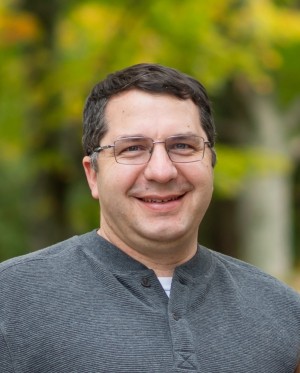 John Ushinski
John Usinski served as a medic from 2011 to 2012. A Staff Sergeant during his deployment, he exited the military as a Sergeant First Class. He is currently a firefighter in Maynard, Massachusetts in his first semester of Bay Path University’s MS in Clinical Mental Health Counseling with Advanced Trauma-Informed Counseling Concentration.
When John Ushinski came home from his deployment in Uganda, it took him a few years to realize how much stress he’d carried back with him.
Part of an eight-person civil affairs group that lived in the community of Karamoja, Uganda, he served as the team’s sole medic. “I am a pacifist by nature, which is why I became a medic,” he explained.
“In the military. the role of medics can supersede skilled paramedics or nurses, in terms of what you learn and are expected to do,” he stated. “I learned to administer IVs, do sutures, and give cardiac care. Our group was a two day journey or 12 hour helicopter trip to the nearest medical facility. So, they're reliant on me for everything from general care for wellness all the way up to emergency trauma.”
The team was assigned to live among and work closely with the civilian population to gather information and limit damage to their communities; part of a larger mission aimed at cutting off supply chains connecting Uganda to Afghanistan and Iraq. “The best way to describe it is that we were there to win the hearts and minds of people,” he said.
He would often witness women being treated cruelly and children struck when they approached his team, and he felt conflicted about intervening, understanding that it could influence the relationships his team was there to build. “If kids came over,” he said, “these individuals would just smack the children away from us.”
He also struggled to reconcile how hard it was for some of the people he met to get enough food and clean water with his growing sense that some of the work his team was doing helped the United States secure oil and other resources overseas.
Even as he questioned aspects of the assignment, John took pride in the care he gave his teammates. Years later, when some of them reached out about injuries that continued to bother them, the detailed records he’d kept as their medic helped them document what had happened and seek benefits.
After leaving the military, John became a firefighter for the town of Maynard and continued to come to terms with the toll of the deployment on his own mental health. “I don’t think I had even realized how much emotional stress that put on me,” he said. “I think it was a couple years after the fact when it actually started to kind of, like, become an issue.”
He lost friends in both the military and the fire service, and when he sought counseling, it was difficult to find a therapist who truly understood those roles and the experiences that come with them. He recalled feeling judged by one therapist as he spoke about his service, and another who, he sensed, didn’t believe what he was telling her.
“I know that among people who’ve done the work, there’s a recognition that comes quickly. We share stories, whether it’s military or fire, so you’re aware that that’s the kind of stuff that happens,” John said. “Now, my main goal is to be able to work with veterans and first responders and make the process of seeking help and the experience of getting help work better for us.”